Your Brain on Gaming Clips: The Wild Science Behind Why TikTok Has You Locked In at 2AM
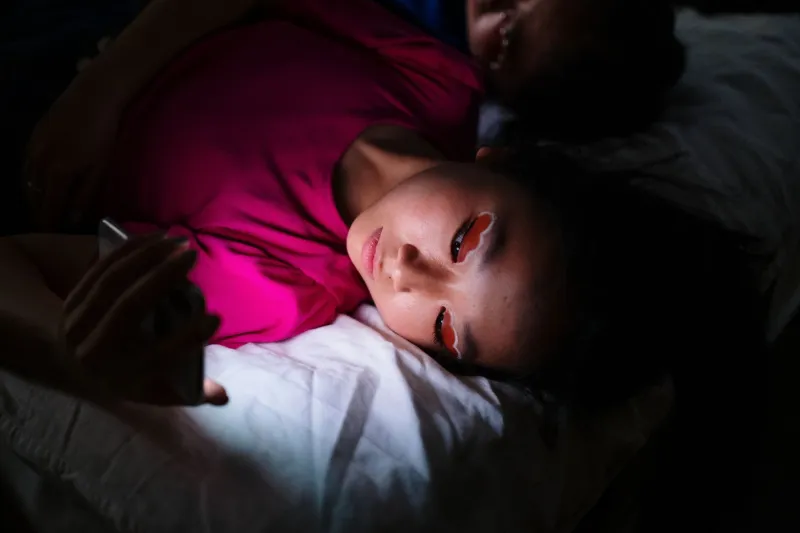
You've been there. You sit down with your phone, fully intending to watch maybe two or three gaming clips before bed. Reasonable. Responsible, even. Then you blink, and somehow it's 2:47AM and you've deep-dived into a rabbit hole of Among Us fails, Elden Ring boss rage compilations, and a surprisingly emotional video essay about Stardew Valley. Your phone battery is at 3%. You have school in five hours.
Welcome to the infinite scroll. Population: basically every teen in America.
But here's the thing — this isn't a personal failure or a lack of willpower. There's legit neuroscience happening in your skull every time you swipe up. And once you understand it, you can actually use it to your advantage instead of waking up exhausted and slightly ashamed of your life choices.
The Dopamine Loop You Didn't Sign Up For
Okay, quick brain class (don't worry, it's way more interesting than AP Bio). Your brain runs on a chemical called dopamine, which is basically the "ooh, something good might happen" chemical. Notice that — it's not the pleasure chemical, it's the anticipation chemical. That distinction is huge.
When you scroll TikTok, your brain doesn't know what's coming next. Could be a boring clip. Could be the most insane gaming moment you've ever seen in your life. That unpredictability fires off dopamine constantly, keeping you in a state of low-grade excitement. Psychologists call this a "variable reward schedule," and it's the same mechanism that makes slot machines so hard to walk away from. Except instead of quarters, you're spending minutes. Then hours.
Dr. Anna Lembke, a Stanford psychiatrist who studies addiction, has described this kind of tech design as "dopamine nation" — environments engineered to keep your reward system perpetually activated. Gaming content hits especially hard because games themselves are already designed around reward loops. You're basically getting a dopamine appetizer (the clip) that makes you hungry for the main course (playing the actual game), which keeps you watching more clips, which makes you want to play more... you see where this goes.
The Algorithm Knows You Better Than Your Best Friend
Here's where it gets genuinely wild. TikTok's recommendation algorithm doesn't just show you content you've liked before — it's actively learning the micro-signals you don't even realize you're sending. How long you paused on a clip before scrolling. Whether you rewatched the first three seconds. If you slowed down even slightly when a particular game appeared on screen.
Content creators who make gaming clips have figured this out too. "The first two seconds are everything," says one popular gaming TikToker who posts Fortnite and Valorant content to over 800K followers. "If I don't hook someone before they've even consciously decided to watch, they're gone. So every clip starts mid-action, mid-reaction, or mid-chaos. The brain doesn't get a chance to opt out."
That's not manipulation — okay, it's a little manipulation — but it's also just smart content creation. The algorithm rewards creators who keep viewers watching, so creators optimize for that, and the algorithm learns your preferences from those optimized clips. It's a feedback loop running at machine speed, and your poor human brain is trying to keep up.
Why Gaming Content Specifically Hits Different
Not all TikTok content is equally addictive, and gaming clips have a particular cocktail of hooks that make them uniquely hard to escape.
First, there's social proof and FOMO. When you see 2 million people react to a clip of someone pulling off an impossible Rocket League aerial, your brain registers that as "important event I need to know about." Missing cultural moments feels genuinely bad to the teenage brain, which is wired for social belonging.
Second, there's skill admiration. Watching someone execute something technically incredible — a frame-perfect speedrun, a clutch 1v5 in CS2, a no-hit boss kill — activates mirror neurons in your brain, giving you a pale echo of the satisfaction the player felt. You're essentially borrowing their achievement.
Third — and this one's sneaky — there's parasocial warmth. When you follow a gaming creator for long enough, your brain starts treating them like a friend. Their reactions feel familiar. Their humor feels personal. And you want to keep hanging out with your "friend," which means more watch time.
Flipping the Script: Using the Addiction as a Tool
Okay, so now that you know you're basically being scientifically outmaneuvered every time you open the app, what do you actually DO about it? The answer isn't "delete TikTok forever" because come on, let's be real. The answer is getting intentional.
Use the algorithm as a game discovery engine. Every time a clip makes you genuinely curious about a game you haven't played, save it. Don't just double-tap and scroll — save it to a dedicated collection. At the end of the week, you've got a curated list of games worth actually trying, filtered by your own genuine reactions rather than whatever's being advertised.
Set a "scroll budget" before you open the app. Decide you're watching for 15 minutes to find one new game to research. Give yourself a mission. The algorithm loves passive users — so be an active one. Search intentionally, filter by creators you actually trust, and bounce when the mission's done.
Follow the rabbit hole to communities, not just content. When a clip gets you hyped about a game, use that energy to find the actual community — subreddits, Discord servers, YouTube channels with real depth. TikTok clips are trailers; the community is the full experience.
Recognize the difference between "entertained" and "zoned out." There's nothing wrong with watching gaming clips for fun. But there's a difference between laughing at a genuinely hilarious GTA moment and mindlessly scrolling because you're avoiding homework. Check in with yourself. Seriously, just ask: am I actually enjoying this right now?
The Bottom Line
Your inability to stop watching gaming TikToks isn't a character flaw — it's a predictable response to systems specifically engineered to capture and hold your attention. The designers of these platforms have literal PhD researchers working on this stuff. You're not weak; you're just human.
But humans can also be self-aware, strategic, and kind of sneaky in their own right. Once you understand the game the algorithm is playing, you can play it back. Use the dopamine loop to discover genuinely great games. Use the parasocial warmth to find creators whose taste you actually trust. And use the scroll budget to protect the thing the algorithm definitely doesn't care about: your sleep schedule.
Now put your phone down. Or don't. We're a teen entertainment website, not your mom.