Old Games, Wild Tricks: How Teen Gamers Are Breaking, Bending, and Rebuilding Gaming History
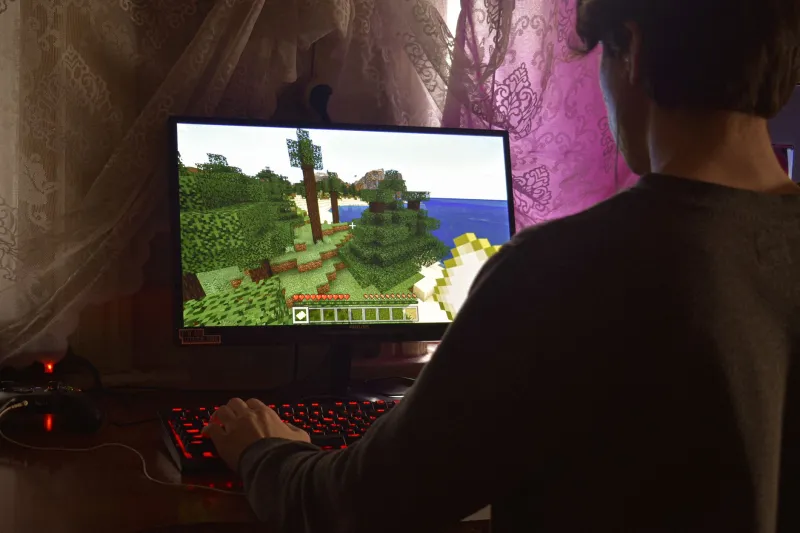
Somewhere right now, a teenager is playing Super Mario 64 — but not the way Nintendo intended. They're clipping through walls, executing frame-perfect jumps, and finishing the entire game in under seven minutes. Somewhere else, another teen just uploaded a Pokémon ROM hack they spent six months building, complete with custom sprites, new dialogue, and a storyline that's honestly better than some official releases. And in a Discord server you've probably never heard of, a modder is finishing up a total conversion of Skyrim that adds an entirely new continent.
This is the world of speedrunning, modding, and ROM hacking — and teens are absolutely running it.
What Even IS Speedrunning, and Why Did It Blow Up?
Speedrunning is exactly what it sounds like: finishing a game as fast as humanly (or technically) possible. But it's way more nuanced than just mashing buttons quickly. Speedrunners study games at a deeply obsessive level — frame data, memory addresses, physics engine quirks — to find exploits that shave fractions of seconds off their times. These aren't cheats in the traditional sense. They're discoveries, and the community treats them like scientific breakthroughs.
The format exploded on Twitch partly thanks to events like Games Done Quick (GDQ), a charity marathon where elite speedrunners blaze through titles back-to-back while raising millions for organizations like Doctors Without Borders and the Prevent Cancer Foundation. GDQ events routinely pull hundreds of thousands of concurrent viewers, and they've introduced mainstream gaming audiences to runs that feel genuinely impossible to watch — like someone finishing The Legend of Zelda: Ocarina of Time in under twelve minutes.
For teens, speedrunning is attractive for a bunch of reasons beyond just the spectacle. It turns familiar games into entirely new experiences. It's a meritocracy — the leaderboard doesn't care how old you are or where you're from. And it has one of the most welcoming communities in all of gaming.
Marcus, 17, from Ohio, started speedrunning Celeste last year after watching a GDQ highlight on YouTube. "I'd already beaten the game normally, but watching someone clear it in under thirty minutes using tech I'd never seen made my jaw drop," he told us. "I thought I'd try it for fun. Now I'm top 200 on the any% leaderboard and I stream my runs twice a week."
Where to Start Your Speedrunning Journey
The single best resource for new runners is Speedrun.com, which catalogs world records and community guides for thousands of games. Most popular titles have beginner-friendly categories — "any%" (finish the game by any means) is usually the most accessible entry point, while "100%" and specific challenge categories come later once you've got the basics down.
Your toolkit doesn't need to be fancy. You'll want:
- LiveSplit — A free, customizable timer that tracks your splits (individual segment times) and compares them against your personal bests in real time.
- OBS Studio — If you want to stream or record your runs, this free software is the industry standard.
- A Discord server for your game — Almost every major speedgame has a dedicated server where veterans will answer beginner questions without making you feel dumb for asking.
Start with a game you already love and know well. The learning curve is steep enough without also having to learn a game from scratch.
Modding: When You Want to Actually Change the Game
If speedrunning is about mastering a game's existing systems, modding is about rewriting those systems entirely. Game mods can range from small quality-of-life tweaks (like UI improvements or bug fixes) to massive overhauls that add new characters, storylines, weapons, and entire game modes.
The PC gaming ecosystem is where modding thrives hardest, and platforms like Nexus Mods host hundreds of thousands of community-made modifications for games like Skyrim, Fallout 4, Stardew Valley, and The Witcher 3. Some of these mods are so sophisticated that they rival official DLC in scope and quality — and many were created by teenagers.
Priya, 16, from California, has been modding Stardew Valley for two years. Her most downloaded mod adds a new NPC with full custom dialogue and a multi-stage questline. "I'd never coded anything before I started modding," she said. "I learned C# basically by breaking the game repeatedly and Googling why. Now I'm thinking about studying game design in college."
That's the real secret about modding: it's one of the most effective on-ramps into actual game development. Learning to work inside an existing engine teaches you how games are structured in ways that no YouTube tutorial can fully replicate.
Tools to get started:
- Stardew Valley Modding → SMAPI (the community's modding framework)
- Minecraft Modding → Forge or Fabric, paired with Java basics
- Skyrim/Fallout → The Creation Kit (Bethesda's official modding tool, free on Steam)
- General game modding → Check the Nexus Mods wiki for game-specific guides
ROM Hacks: The Most Ambitious (and Legally Murky) Layer
ROM hacking takes things a step further. Instead of modding a PC game through official or semi-official channels, ROM hackers modify the actual binary code of classic console games — think NES, SNES, Game Boy, Nintendo 64, and beyond. The results can be extraordinary: completely new Pokémon games with original regions and stories, Super Mario World levels that would make Nintendo's own designers sweat, and Zelda adventures that have never been officially released.
Some ROM hacks have become genuinely legendary in gaming culture. Pokémon Unbound, Pokémon Radical Red, and Super Metroid Redesign are just a few examples of fan-made projects that rival — and in some cases surpass — their source material in ambition.
Here's where we have to have an honest conversation, though: the legal landscape around ROMs is complicated. Downloading ROMs of games you don't own is technically copyright infringement under U.S. law. Distributing ROM hacks is a legal gray area — most creators distribute patches (using tools like Lunar IPS or xdelta) rather than the ROM files themselves, which the user applies to a legally obtained copy. This is the community's standard workaround, and it's worth understanding before you dive in.
Nintendo in particular is notoriously aggressive about protecting its intellectual property, so be aware of what you're doing and where you're sharing it.
Tools used by ROM hackers:
- Lunar Magic — The go-to editor for Super Mario World ROM hacking
- AdvanceMap — For hacking GBA-era Pokémon games
- Tiled — A general-purpose map editor used across many projects
- Hex editors — For deep-level code manipulation (advanced, but powerful)
The Community That Ties It All Together
What makes this whole ecosystem work isn't the tools — it's the people. Speedrunning, modding, and ROM hacking communities are remarkably collaborative and generous with knowledge. Veteran runners write detailed guides for beginners. Modders share their source code so others can learn from it. ROM hackers post tutorials on platforms like YouTube and maintain active Discord servers where questions actually get answered.
For teens, this represents something genuinely valuable: a creative community where skill is respected, effort is rewarded, and age doesn't create a barrier to entry. You can be sixteen years old with a world-record speedrun or a mod that's been downloaded a hundred thousand times. Nobody's going to ask for your credentials.
Should You Jump In?
Honestly? Yes — with some caveats. Pick the lane that excites you most. If you love the competitive rush and the feeling of optimization, speedrunning is your thing. If you want to create and see other people play something you built, modding is where you belong. If you grew up on retro games and want to experience them in completely new ways, ROM hacking will send you down a rabbit hole you'll never fully escape.
Just go in with realistic expectations. World records take months or years of dedication. Good mods require learning to code. ROM hacking has a steep technical curve. But the communities around all three of these scenes are among the most supportive in gaming — and the skills you pick up along the way? Those are real, transferable, and genuinely impressive.
The games are old. The tricks are wild. And the teens reinventing them are just getting started.