Fifty Games Deep and Nothing to Show for It: The Real Reason You Can't Stop Starting and Never Finishing
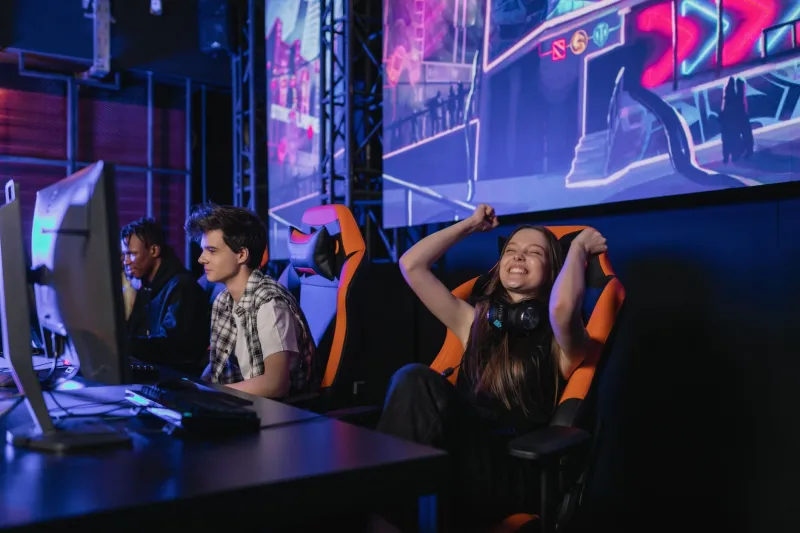
Here's a number that might hit a little too close: according to various player data reports, somewhere between 80 and 90 percent of downloaded games are never completed. Not abandoned because they're bad. Not uninstalled out of frustration. Just... quietly never finished, sitting in a library like a stack of books you swore you'd get to.
If you're a teen gamer in 2024, you almost certainly have a backlog that would make your parents' heads spin. You've got games from Steam sales, PlayStation Plus freebies, Game Pass additions, and birthday gifts going back three years. You've started most of them. You've finished almost none of them.
This isn't a personal failing. It's a structural problem — and the gaming industry, streaming culture, and your own brain are all in on it.
The Library That Broke Your Brain
Not that long ago, owning a game meant something. You saved up, bought it, and played it until you knew every corner of it — because it was the only thing you had. Completion wasn't a goal; it was just what happened.
Now? Subscription services give you access to hundreds of titles at once. Steam sales make it genuinely cheaper to buy a game than to skip it. Your library has become so enormous that choosing what to play has turned into its own stressful activity.
Psychologists call this "choice overload" — the phenomenon where too many options actually makes it harder to commit to any one thing. When you have three games, you pick one and play it. When you have three hundred, you spend forty-five minutes scrolling, start something, second-guess yourself, and switch to something else before the tutorial is even over.
The abundance that was supposed to make gaming better has quietly made it harder to enjoy.
FOMO Is the Final Boss You Never Beat
Social media and streaming culture have added a layer of pressure that previous generations of gamers simply didn't have. Every week, there's a new release that's all over TikTok, dominating Twitch, and filling your group chat. If you're not playing it right now, you're already behind.
This creates a cycle where no game ever gets your full attention, because there's always something newer demanding it. You're twenty hours into a massive RPG when a new title drops and suddenly everyone's talking about that instead. Do you finish what you're playing — knowing you'll be out of the conversation for weeks — or do you jump ship and join the hype?
Most people jump ship. And then the cycle repeats.
"I've started Elden Ring three times," admits Devon, 17, from California. "Every time I get into it, something else comes out and my friends switch over and I don't want to be the one still playing the old thing. So I start the new thing. And then something else comes out."
Devon has put over 60 hours into Elden Ring across those three attempts. He has seen the tutorial area in exceptional detail. He has never progressed past it.
The Streaming Effect: Why You Watch More Than You Play
Here's a weird twist: a huge chunk of gaming culture now happens through watching rather than playing. You might know more about a game's story from a streamer's playthrough than from your own actual save file. And once you've seen the major moments, the emotional pull to experience them yourself is... significantly reduced.
Streaming has essentially created a shortcut to the feeling of having played something without the time investment of actually playing it. Which sounds efficient until you realize that the actual value of gaming — the problem-solving, the immersion, the sense of personal accomplishment — doesn't transfer through a screen.
You watched someone else beat the final boss. It was cool. But it wasn't yours.
Why Finishing Actually Matters
Completion gets weirdly dismissed in gaming culture, like it's some arbitrary achievement that doesn't matter in the age of infinite content. But there's something real that happens when you see a story through to its end, overcome a final challenge, or watch the credits roll on something you've invested in.
It's the same reason finishing a book or a TV series feels different from stopping halfway. Narrative closure is a psychological thing — your brain processes completed experiences differently than abandoned ones. Games that you finish tend to stick with you. Games you dropped after three hours blur together into a vague memory of menus and tutorials.
There's also the skill angle. You get better at games by playing them deeply, not broadly. Jumping between titles constantly means you're always in the learning-curve phase, never in the mastery phase. Finishing games, even imperfect ones, builds patience, persistence, and the ability to push through frustrating sections — which, it turns out, are pretty useful skills beyond the controller too.
Practical Strategies for Actually Getting to the Credits
Pick one game and commit publicly. Tell your friends, post about it, make it a thing. Social accountability is surprisingly effective. If people know you're doing a "finish this game" run, you're way more likely to actually do it.
Ignore your backlog while you're playing something. Don't browse the store. Don't check what's on sale. The backlog will be there. The game you're currently in deserves your attention.
Set a "new game" rule. Before you start anything new, you have to either finish your current game or formally decide you're done with it. No passive abandonment. Make it a choice.
Lower the difficulty if you're stuck. Pride is not worth a DNF. If a section is killing your momentum, adjust the settings and keep moving. Finishing on easy still counts as finishing.
Unsubscribe from the hype cycle, at least temporarily. Mute the TikTok sounds, skip the Twitch streams of the new release, and give yourself permission to be behind. The game will still be there in a month. Your save file won't delete itself.
The Takeaway
You're not broken. You're not lazy. You're a teenager living inside an entertainment ecosystem specifically designed to keep you in a permanent state of starting things. That's a feature, not a bug — for the companies making money off your engagement.
Pushing back against that by actually finishing something is a small act of rebellion. And it's one that pays off in a way that another abandoned tutorial never will.
Now close the Steam store. Your game is waiting.