Trapped in a Trash Game: The Weird Science Behind Why You Can't Log Off (Even When You Hate It)
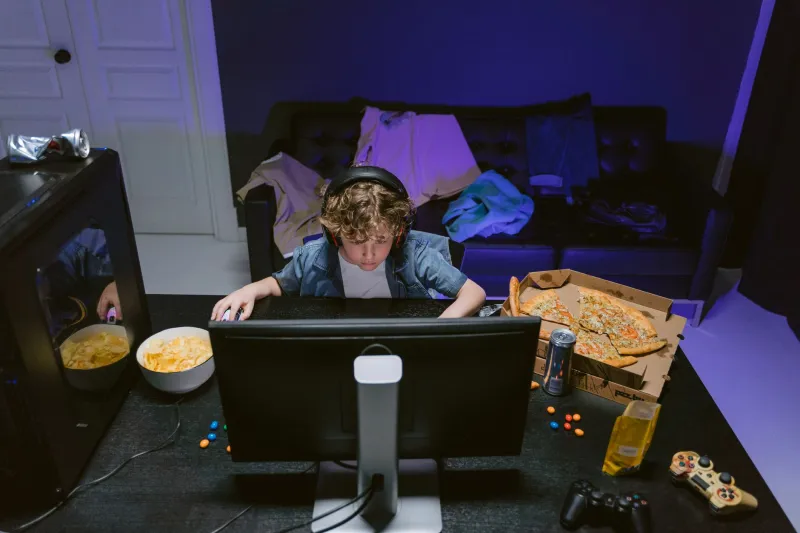
Let's paint a picture. It's 11:47 PM on a Tuesday. You've got homework due tomorrow, your eyes feel like sandpaper, and the game you're currently playing is — by your own admission, out loud, to your friends in the group chat — not even fun. You said it yourself. "This game is trash." You sent the meme about it. You laughed at the Reddit thread roasting it.
And yet. You're still there. Grinding. Logging back in. Telling yourself "just one more round."
Welcome to what we're officially calling the Gaming Curse, and buddy, you are not alone.
So Why Does This Even Happen?
Here's the thing nobody tells you when you first boot up a game: your brain doesn't actually care whether the game is good. Your brain cares about patterns, rewards, and completion. And a lot of games — even deeply mediocre ones — are basically engineered to exploit all three at the same time.
Game designers (especially in the mobile and live-service space) have spent years studying behavioral psychology to figure out exactly how long to make you wait before giving you a reward, how big that reward should feel, and how to make "quitting" feel like losing something. That little dopamine hit when you level up, unlock a skin, or finally beat a stage you've been stuck on? That's not an accident. That's a feature. And it works just as well in a 3-star game as it does in a 5-star one.
The result? You end up in a loop where the game isn't making you happy, but stopping the game feels weirdly bad. Classic.
The Sunk Cost Trap (It's More Real Than You Think)
Okay, real talk — have you ever kept playing a game specifically because you already spent money on it, or because you've already put in 200 hours? That's the sunk cost fallacy doing its thing, and it hits teen gamers especially hard.
Jordan, 16, from Ohio, described it perfectly: "I spent like $40 on a battle pass for this game I already knew was mid. But once I bought it, I felt like I had to play enough to 'get my money's worth.' I ended up playing for two more months even though I was miserable every single session. It made zero sense."
Here's the cold truth the sunk cost fallacy doesn't want you to hear: the money is already gone. The hours are already spent. Continuing to play a game you hate doesn't recover those resources — it just adds more misery to the pile. Your brain hates accepting this, which is exactly why it keeps whispering "but you've already come so far" every time you think about uninstalling.
FOMO Is a Whole Villain in This Story
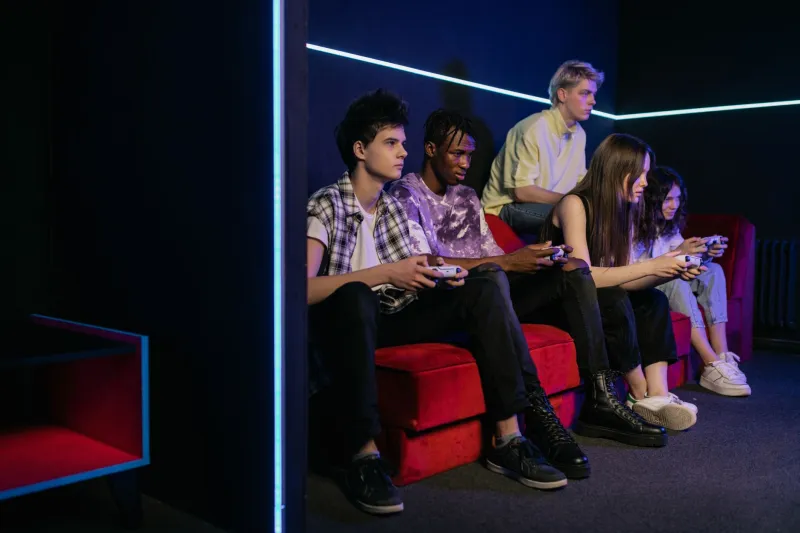
Let's talk about the social layer, because this one might actually be the biggest trap of all. A lot of teens aren't playing bad games because they want to — they're playing because their entire friend group is playing, and the thought of being the one person who doesn't get the references, doesn't have the unlocks, or can't join the squad session is genuinely stressful.
FOMO (Fear Of Missing Out) in gaming isn't just about the game itself. It's about the conversations, the inside jokes, the shared experiences. If all your friends are grinding a particular title, opting out feels like opting out of the group. And for most teenagers, that's a much higher social cost than a few hours of boredom.
Marcus, 17, from Atlanta, put it bluntly: "I played a game for almost four months that I thought was genuinely boring. But my whole friend group was obsessed with it, and every lunch period they'd be talking about it. I didn't want to be the guy who had nothing to say. So I kept playing. It was basically homework at that point."
The Completion Brain Is Not Your Friend Right Now
Some of you are suffering from a slightly different curse: you need to finish things. Achievements, story modes, collectibles — if there's a progress bar anywhere on the screen, your brain has already decided you're not allowed to stop until it hits 100%.
This is honestly one of the sneakiest traps because it feels productive. You're not just wasting time — you're completing something! Except the game is bad and you've been miserable for six hours chasing a platinum trophy in a title you'd rate two stars on a good day.
Game developers know this type of player exists. That's why so many games are absolutely stuffed with collectibles, side quests, and achievement systems that have nothing to do with whether the game is actually enjoyable. It's a retention strategy, and it works beautifully on the completion-brained among us.
How Teens Are Actually Breaking Free
The good news? People escape this curse every day. Here's what actually worked for real teens who finally managed to close the tab, uninstall the app, or sell the cartridge.
Give yourself permission to quit. This sounds stupidly simple, but a lot of people genuinely need someone to say it: you are allowed to stop playing a game you don't like. There is no rule. No one is grading you. Uninstalling is not failure.
Replace the social piece separately. If FOMO is your main driver, find a different way to stay connected to your group. You can still participate in the conversation without logging 30 hours a week. Ask your friends to catch you up. Engage with the memes. Be honest that you're taking a break — a lot of times, at least one other person in the group is secretly relieved someone finally said it.
Set a hard deadline. Kezia, 15, from Portland, tried this: "I told myself I'd play until the end of the current season, and then I was done no matter what. Having a specific end date made it feel less like quitting and more like finishing. And when the season ended, I actually did stop. It's been three months and I don't miss it at all."
Audit your actual feelings mid-session. Next time you're playing, pause and genuinely ask yourself: am I enjoying this right now? Not "will I enjoy it in twenty minutes" or "was I enjoying it an hour ago" — right now, in this moment. If the honest answer is no, that's information worth acting on.
The Takeaway (Besides the Fact That Your Brain Is Kind of Chaotic)
Getting trapped in a game you hate isn't a personality flaw. It's the result of some genuinely sophisticated psychological engineering colliding with very normal human tendencies — the need to belong, the desire to finish what you started, the resistance to accepting a loss. Game companies have entire teams working to keep you playing regardless of whether you're having fun.
Knowing that doesn't automatically free you, but it does change the conversation you have with yourself. The next time you catch yourself grinding through something you described as "literally the worst" just two days ago, maybe pause for a second. Check in. Ask whether you're playing because you want to, or because stopping feels harder than continuing.
And if it's the latter? Close the app. Touch some grass. The trash game will still be there if you change your mind — but chances are, you really won't.