Squad Up or Solo Queue? The Real Reason Gaming Hits Different When Your Best Friend Is in the Party
You know the feeling. You're grinding through a dungeon solo, it's fine, whatever, you're getting through it. Then your best friend hops in the party, and suddenly the whole energy shifts. The music sounds better. The wins feel bigger. Even the losses somehow become hilarious instead of infuriating. What is that? Why does adding one person to your session completely rewire the entire experience?
Spoiler: it's not just nostalgia or good luck. There's actual science behind why gaming with your best friend slaps harder than almost anything else in the world — and TeensFuns is here to break it all the way down.
Your Brain on Co-Op: The Chemistry Nobody Warned You About
When you're playing alone, your brain is still having a good time. Dopamine hits when you level up, cortisol spikes when you're losing, adrenaline kicks in during clutch moments. It's a whole internal party. But the second you add your best friend to the mix? Your brain throws open the doors and invites oxytocin to the party too.
Oxytocin — yeah, the same chemical linked to hugs and deep human connection — gets released during cooperative social experiences. Gaming together, especially when you're coordinating, communicating, and celebrating wins, triggers that same bonding response. Researchers at the University of Wisconsin found that people who played cooperative video games together reported feeling closer and more trusting of each other compared to those who played solo or even competitively. Basically, every time you and your bestie pull off a clutch revive or finally beat that boss you've been stuck on for three weeks, your brains are literally bonding.
That's not cheesy. That's neuroscience.
Couch Co-Op vs. Online Multiplayer: Two Different Vibes, Same Core Energy
There's a generational debate happening in gaming households across America right now: is local co-op — you know, same couch, split screen, one bag of chips between two people — better than hopping online together from separate locations?
Honestly? Both hit different, and here's why.
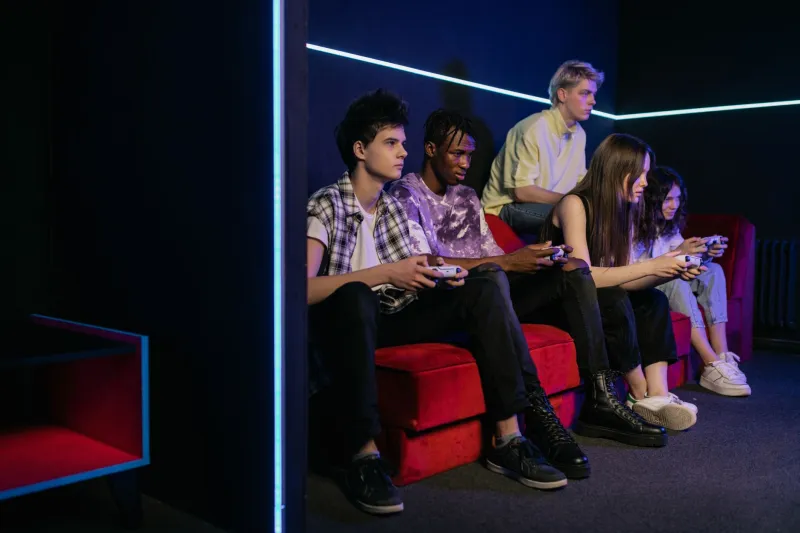
Local co-op has a physical energy to it that online just can't replicate. When you're sitting next to your friend and they scream at the TV, you feel it. You can elbow them when they steal your kill. You can see their face when they make the worst possible decision in the history of gaming decisions. That shared physical space creates what psychologists call "emotional contagion" — you literally catch each other's emotions. Their excitement becomes your excitement. Their panic becomes your panic. It's chaotic and messy and absolutely the best thing ever.
Online co-op, though? That's its own kind of magic. There's something weirdly intimate about being in a dark room at 11 PM, voice chatting with your best friend who's across town (or across the country), both of you locked into the same mission. The distance disappears. The game becomes the shared world you're both living in for those few hours. A lot of teens have said some of their deepest conversations have happened during long gaming sessions online — the kind of talks that just flow naturally when you're not making direct eye contact and your hands are busy.
Competitive vs. Cooperative: Which One Builds the Better Friendship?
Here's where it gets spicy. Playing with your friend and playing against your friend are two completely different psychological experiences — and both are valid, but for very different reasons.
Cooperative gaming builds what researchers call "shared goal bonding." You're both working toward the same thing, which means every obstacle you overcome together reinforces your relationship. You develop shorthand communication, you learn each other's gaming styles, and you build trust. Think about it: if you've run enough Minecraft builds or Overwatch matches with someone, you start to just know how they think. That's not a gaming skill. That's an actual life skill.
Competitive gaming with a friend, on the other hand, is basically a stress test for the friendship — in the best way. It reveals how you both handle losing, how gracious (or absolutely insufferable) you are when you win, and whether your friendship can survive trash talk. Spoiler: the friendships that can laugh through a Mario Kart betrayal are usually the strongest ones. A little healthy competition actually builds resilience in relationships, according to social psychologists who clearly have never been hit with a blue shell by someone they trusted.
The Communication Upgrade You Didn't Know You Needed
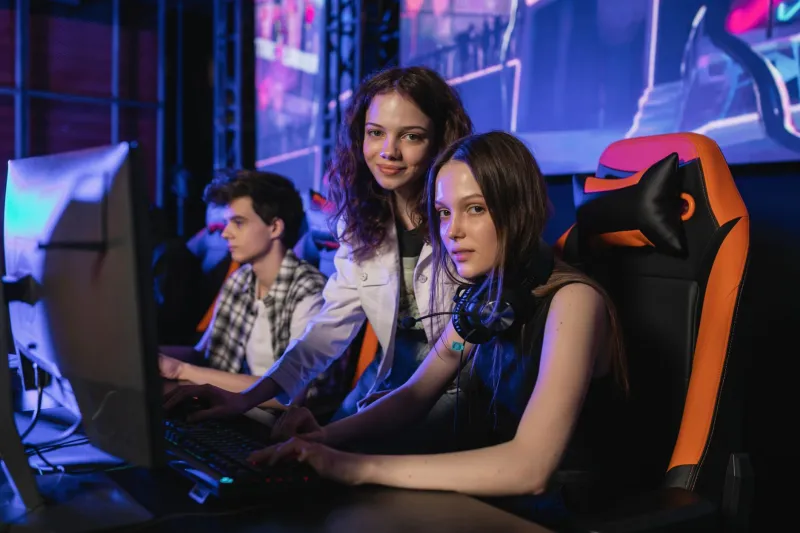
Here's something wild: gaming with a friend doesn't just change how you play — it changes how you talk. Research on team-based gaming has shown that players develop faster, more efficient communication patterns when they're working with someone they already have a relationship with. You stop saying full sentences and start operating on shorthand. "Left." "Got it." "WAIT NO—" "Too late."
This kind of rapid, high-stakes communication actually builds real-world teamwork skills. Schools and companies spend millions on team-building exercises trying to get people to communicate like gamers naturally do after a few hours in a party together. You're out here accidentally developing leadership and collaboration skills while trying to finish a raid. Don't let anyone tell you gaming isn't educational.
The Moments That Actually Last
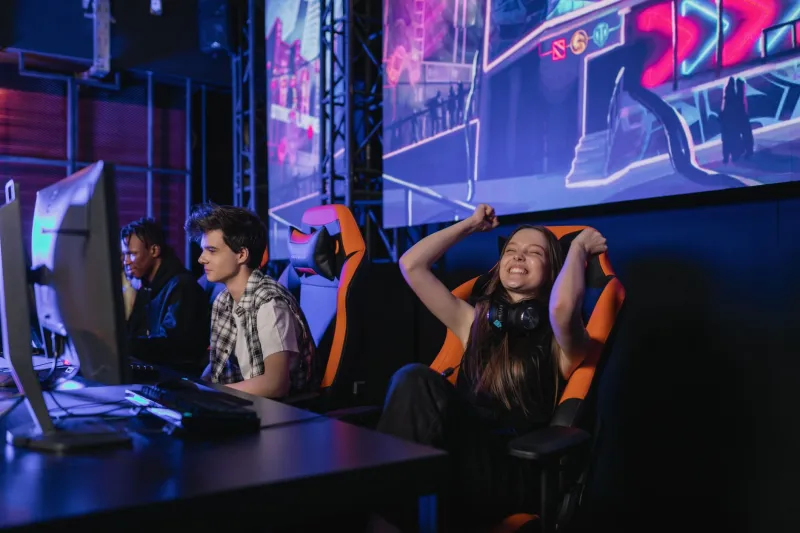
Ask any teen about their best gaming memory and nine times out of ten, it involves another person. The time you and your best friend stayed up until 4 AM to finally beat that impossible level. The moment your squad clutched a win in the final ten seconds. The absolutely unhinged decision someone made that somehow worked. These are the stories that get retold at lunch, at sleepovers, years later.
Solo gaming gives you personal achievements. Squad gaming gives you shared mythology. And shared mythology is basically the foundation of every great friendship.
Some of the teens we talked to put it perfectly:
"I've played games alone and it's fun, but when me and my friends are all in a call together losing our minds over something dumb that happened — that's the stuff I actually remember."
"My best friend and I have this thing where we always play together when one of us is having a bad day. It's like, the game doesn't even matter. It's just an excuse to hang out and forget about everything."
That right there is the friendship algorithm in action.
So, Should You Always Squad Up?
Not necessarily. Solo gaming has its own therapeutic value — it's your time, your pace, your vibe. Sometimes you need that decompression without the social pressure of coordinating with another human. But if you've been defaulting to solo queue because it feels easier? You might be missing out on the version of gaming that actually sticks with you.
Send your best friend a game invite tonight. Even if you lose, you'll probably end up laughing about it for weeks. And that, scientifically and emotionally speaking, is the whole point.